A Golden Age

We’re living in a golden age for tabletop games.

When I was younger, I lucked into the pastime that became my hobby that became my career. My cousin had a D&D boxed set and ran a game. It was the quintessential old-school gaming experience, elves creeping into an imaginary underground that we envisioned with our minds there among the potato chips, Pepsi, Iron Maiden posters, and “Tom Sawyer” on the stereo. I had had no idea that this world existed, but in that moment, who I would become for the next 30-plus years had its genesis.

And it was pure serendipity. I didn’t even know these games existed. I didn’t seek them out. I didn’t stumble across them in a search for something for which I had a vague longing. It just happened. I got lucky.

[conclude flashback]

Compare that to now:

“Over half of the new people who started playing Fifth Edition [the game’s most recent update, launched in 2014] got into D&D through watching people play online,” says Nathan Stewart, senior director of Dungeons & Dragons.

The Verge

That’s amazing. People are able to find the hobby now. Less and less do they have to wake up surrounded by it like a Dunsanian protagonist.

I write a lot here about satisfying players’ psychological needs, and that’s what much of this points back to. Players have these needs — whether they know it or not — and the tools and channels available to us now not only help them meet those needs, they help them understand and identify those needs sooner. They discover opportunities for mastery, in seeing game systems bloom before them. They understand relatedness by witnessing players cooperating to tackle in-game challenges and growing relationships around the table. They see the autonomy of players choosing their fate and then reaping the rewards (or consequences…). It’s no longer sequestered in the basements of stoner cousins, it’s out there, and it’s beckoning. And more than ever, it’s inclusive. It’s representational. Players are seeing that games are for them, that games are for everyone.

(And in many cases, that relatedness expands beyond the table. People feel connections to other players they’re not even playing with, through the commonality of the games medium and through the ability to interact with those players via social media. Look how many people feel like they belong to various games forums where sharing and discussing ideas is the core activity, or who share a common love for the entertainment format of Critical Role and consider themselves a part of it, even if they’re not on the stream proper.)
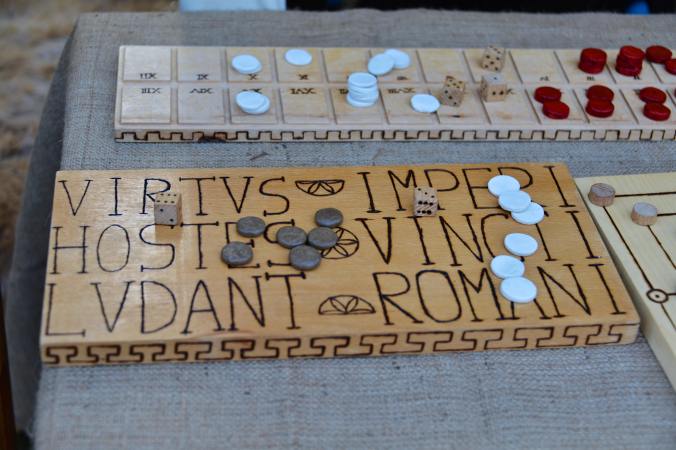
A Roman bone dice and gaming counter on a wooden table

It’s not like it used to be, when you used to have to time travel to ancient Rome in order to find fellow games enthusiasts.

It’s absolutely a golden area for the games table, enhanced greatly by the virtuality and accessibility of it all.

So what does this mean for you? This is your chance to be an evangelist. This is your chance to welcome new people to the hobby, to share new stories. This is your opportunity to be someone’s gateway into a lifetime of satisfying hobby games, or the chance to introduce or even be the next great designer, artist, writer, etc. The barrier to entry has never been so low, and the rewards have never been so great.
GM Toolbox: Action Feedback

One of the major differences between interactive and non-interactive media is the concept of feedback. Games, as interactive media, show you the results of choices you make. If you’re running a game, that’s a tremendous boon for you, as understanding them is the key to keeping your players engaged. (And if you’re playing a game, receiving those feedbacks is part of why you’re playing.)

Computer games are very effective at communicating feedback. They pair immediate graphical output with nuanced sound and, in appropriate cases, fanfare that all demonstrate positive, desired outcomes. And in cases where a sub-optimal result has been achieved, or even failure, they can communicate that as well, imparting teachings that can increase player skill (even in their absence).

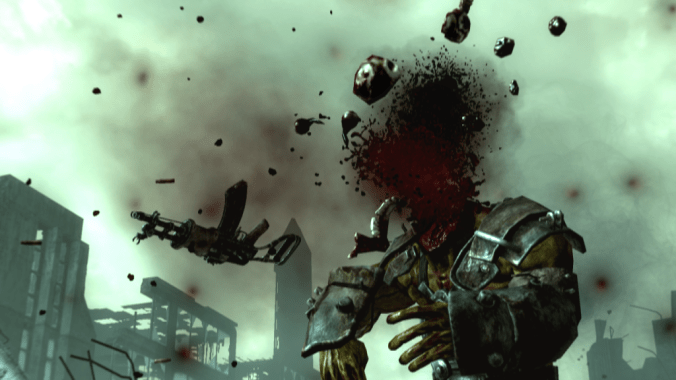
637630-headshot1184344820

There’s little ambiguity about what the player has accomplished here.

Around the RPG table, though, feedbacks are a different beast, and are almost solely the responsibility of the GM. And the GM has a variety of different means to communicate those feedbacks, to keep the players engaged. After all, players play games to make choices, and feedbacks frame the outcomes of those choices.

Granular Feedback

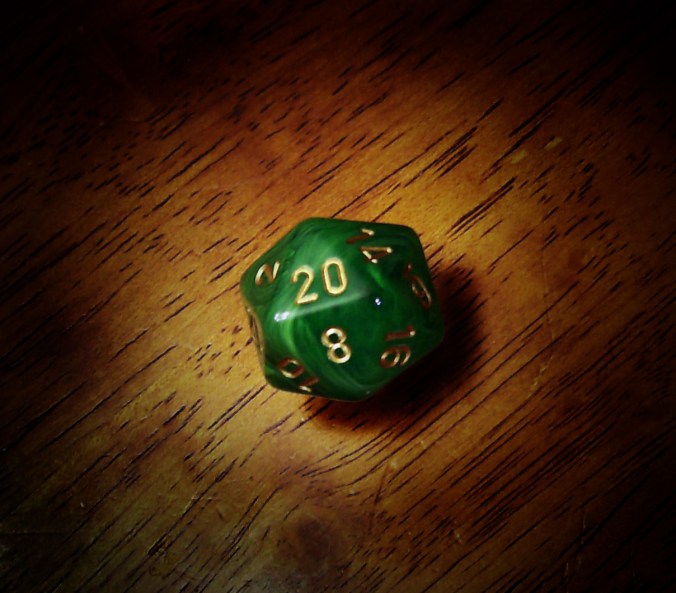
Granular feedback is immediate, showing the sequential, often instantaneous outcome to an action. A dice roll yields instant feedback — you see the number you rolled and you (usually) know whether you succeeded or not, and by how much. A GM description of events can also be granular competence feedback: a description of a combat maneuver’s result, an acknowledgement of having picked a lock, a spell that completely suborns the rancor of a hostile creature. Granular competence feedback is the easiest to convey as a GM.

2nYjCaG - Imgur

Quintessential RPG feedback.

Sustained Feedback

Sustained feedback may be a collection of successive granular feedbacks, but can be more than that in the employ of a skilled GM. Sustained feedback shows the player(s) that they’re on a roll, in the zone, or otherwise achieving an ongoing series of successes. Simple comments like, “The hall is strewn with the unconscious forms of your enemies” can go a long way toward reinforcing a sense of player achievement — they show the player, “Hey, good job, you’ve had a string of successes here.” Pursuit and other forms of extended challenges are great for sustaining feedback. Once the player has achieved the 10 successes required to hack into a database, for example, call out the accomplishment. The individual dice rolls yielding the successes show the granular accomplishment, but finally accumulating the required number is a payoff. Finally eluding a hunter or finally catching up to one’s prey are other strong examples. A bard gradually winning over a crowd, an artist creating their magnum opus, and a codebreaker finally cracking a cipher are other examples. Sustained competence feedback is generally the hardest for a GM to convey, as its circumstances are less frequent than granular feedbacks. But if the GM sets their mind to highlighting these sorts of indicators of progress, they can bridge the granular and cumulative competence feedbacks, and help transition the players from the “little bits” to the “big picture” overall.

1508622546-848197340-4

The intrepid adventurers were able to translate the demented sorcerer’s flesh-bound journal.

Cumulative Feedback

Cumulative feedback is that “big picture,” that overall expression of the little outcomes that shape the whole. RPGs are great for cumulative feedbacks. The campaign itself is a form of cumulative feedback, while individual sessions also represent smaller but still “chunky” cumulative milestones. Multiple-session books, chapters, seasons — whatever your terminology for them, they’re longer-form expressions of feedback. When an antagonist escapes the players or is ultimately brought to their just desserts, that’s a cumulative form of feedback, as it demonstrates the ultimate objective that so many of the granular and sustained actions were working toward.

maxresdefault.jpg

And everything concludes neatly with no loose ends….

Overall, feedbacks help communicate accomplishment, and accomplishment satisfies player needs. Note that accomplishment doesn’t necessarily equal success! Players may feel a sense of accomplishment through having foiled an antagonist’s plans only temporarily (as with many Call of Cthulhu scenarios). They may feel accomplishment through the relatedness of knowing they have earned the ire of a common enemy.

As well, feedbacks can transcend the game as a framework. While in-game rewards are immediate and satisfying, the game’s rewards aren’t bounded to the duration of play itself. Much like a satisfying book or film, playing a game can leave a strong sense of satisfaction after the experience itself has concluded. And that satisfaction is engendered by — and even described by — feedbacks. Indeed, player satisfaction can be the feedback a GM receives for a game session greatly appreciated by the participants.

Summary.001